When clients ask what they need to set goals, I ask them this question first. And every time I ask, I get the same answer:
“If you had to do three times the work in the same amount of time — and you’d get an all-expenses-paid vacation anywhere in the world — could you do it?”
One hundred percent of people say yes.
Which means… you already can focus. You already can perform at a high level. You already can access incredible discipline.
So why—on a random Tuesday—do you suddenly forget how to send one email without checking your phone, wandering into the kitchen, or falling into a 16-minute social media scroll you didn’t mean to start?
And more importantly:
Why does sitting down to set goals feel impossible — even though you want to change your life?
Let’s pull back the curtain because this isn’t a motivation problem. This is a brain bandwidth problem.
What’s Really Stealing Your Focus? It’s Not What You Think
Most people blame themselves for “not being disciplined enough.” The truth is far less personal and far more biological.
1. Context switching is silently draining your brain.
Every time you jump from:
-
email → text
-
Slack → social
-
browser tab → browser tab
-
“I’ll just do this one quick thing…”
…your brain pays a tax.
A big one.
Research shows it can take up to 16 minutes to regain full focus after a single distraction.
Sixteen minutes.
If you get interrupted ten times before lunch? That’s not a bad day. That’s a focus problem.
2. Your dopamine system is wired for now, not “2026 Vision Board Energy.”
You know what feels amazing?
-
A notification
-
A “like”
-
A text from your best friend
-
A quick hit of novelty
You know what feels… less amazing?
-
Sitting down to map out Q1
-
Cleaning your inbox
-
Decluttering your offers
-
Writing goals you’re scared you won’t hit
The brain follows what feels good now. Not what will feel good in 90 days.
3. Midlife is a mental load hurricane.
If your hormones are shifting, your sleep is unpredictable, your responsibilities are stacked, and your brain is juggling ten invisible jobs at once…
Focus won’t come because you decided to focus. It will only come when your nervous system feels safe enough to slow down.
It’s Not Discipline. It’s Friction.
For years, I believed discipline meant pushing harder. More grit. More hustle. More white-knuckling. And every time I burned out, I blamed myself.
But after almost two decades of studying brain-based clarity (and writing about the cosmic 2×4 moments that wake us up in Just Another Leap), here’s what I know:
Your brain isn’t resisting the work. Your brain is resisting the emotional cost of how you do the work.
The good news?
You don’t need a new personality. You just need to remove the friction.
☑️ Step One: Do a “Focus Leak Audit” Before You Set a Single Goal
Most people try to set goals from inside the tornado.
That’s like trying to assemble IKEA furniture during a hurricane.
Before you write one goal, try this:
Ask yourself: where is your focus leaking?
-
What pulls you away the moment you feel overwhelmed?
-
What notifications run your day that you never consciously approved?
-
What tasks do you “pop onto” when you’re avoiding the thing that matters?
-
When was the last time you had 30 minutes of uninterrupted focus — and what did you do with it?
Awareness creates agency.
This is the same brain-pattern interruption I talk about in Just Another Leap — the moment you stop blaming yourself and start noticing your autopilot.
Focus leaks aren’t failures. They’re data.
☑️ Step Two: Create “Micro Windows,” Not All-Day Expectations
Most productivity advice sounds like this:
“Just sit down and get it done.”
Sure. And I’ll just go ahead and become a neurosurgeon over lunch.
You don’t need eight flawless hours.
You need micro-windows of intentional attention:
- 5 minutes to identify your top three priorities for the day (at work or at home)
- 10 minutes to move one lingering task forward — a report, a phone call, a form, a scheduling request
- 7 minutes to look at your next 90 days and remind your brain what matters
- 15 minutes to brain-dump everything swirling in your head so you’re not carrying it around like unpaid emotional labor
If you can’t do a Pomodoro yet?
Totally fine. That’s your brain saying it needs a gentler on-ramp.
A micro window is something you can win at today — even if your brain is fried.
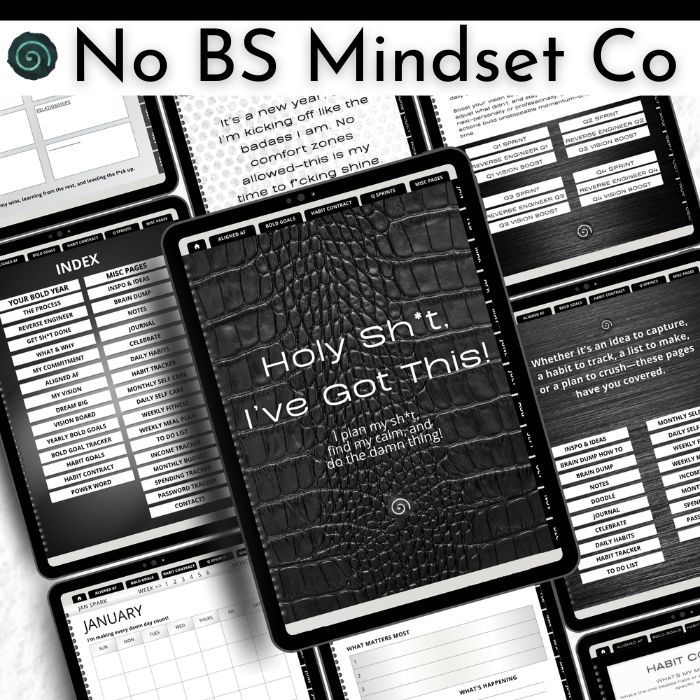
(This is exactly how I designed the weekly pages inside the Unfiltered Planning System. Small, doable, human-paced planning beats “perfect week energy”… every time.)
☑️ Step Three: Make Focus Feel Good (Your Brain Literally Requires It)
Your brain moves toward what feels rewarding.
If work feels stressful, shame-filled, or overwhelming, it will resist — even if the work itself matters deeply to you.
But if work feels:
-
grounded
-
sensory
-
ritualized
-
doable
…your brain stops fighting and starts cooperating.
Try pairing your focus container with one small pleasure:
-
a playlist you love
-
your favorite mug
-
a candle
-
five minutes of quiet before you begin
Not as a treat after you work. As a cue to help your brain want to begin.
This is how you gently rewire “focus = dread” into “focus = comfort.”
☑️ Step Four: Prime Your Brain Before You Plan
Most people try to plan from exhaustion. But your brain cannot create a future it can’t see.
This is where visualization stops being woo and becomes neuroscience:
-
The amygdala stops panicking
-
The RAS goes to work (“Oh! This is what’s important now.”)
-
Dopamine begins to flow from anticipation, not avoidance
When you help your brain see the scene — the clarity, the calm, the momentum — it finally stops sabotaging the steps.
If you need help doing this, this is exactly why I created the 20 Minute Scene Reset.
It’s the tool I wish someone had handed me years ago when I was spinning in overwhelm and couldn’t imagine a next step, much less a next chapter.
The Real Reason You Can’t Focus on Your Goals (And What Happens When You Can)
You don’t struggle with goals because you lack discipline.
You struggle because your:
-
Brain is overloaded
-
Environment is distracting
-
Nervous system is exhausted
-
Autopilot is running the show
-
Planning tools aren’t designed for real life
When you remove the friction, everything changes.
Focus returns. Momentum builds. Clarity reappears. And you remember that you’re capable of so much more than the chaos of your calendar.
And if you’re thinking, “Okay, this is what I’ve been missing,” here’s where to go next:
Read…
Setting BOLD Goals: A Four-Part Framework That Actually Works or…
You can go ALL in here…
➡️ The Unfiltered Digital Planning System
Your brain-friendly way to organize goals, design weekly rhythms, and finally stay consistent —so you can stop surviving your days and start shaping the ones you actually want.