You’ve probably heard dozens of definitions of success. Depending on who you’re listening to, success is about money, freedom, impact, balance, hustle, ease, or some combination of all of the above. No wonder it’s confusing.
What makes this especially tricky is that most people are chasing someone else’s definition without realizing it. They follow the advice, hit the milestone, and still feel unsettled. That’s usually the moment they start asking better questions.
What does success actually mean to me?
And how do I build it in a way that doesn’t burn me out?
The 5 Pillars of Success exist to help answer those questions. They’re not about building the “perfect” business. They’re about creating a version of success that fits your values, your energy, and the season of life you’re in right now.
Depending on which business guru you read, there are four, five, six or seven pillars of success necessary to run the optimal business. According to Elizabeth Wilson of Entrepreneur Magazine, while some 40 million businesses are started each year, a paltry 350,000 break out of the pack and begin growing and making money. Seeing odds like that could stop you in your tracks. Success is a vast topic that can be hard to define.
We often hear about the importance of work ethic, determination, and perseverance in achieving success. But what does it really mean? Here are the core pillars that you need to follow in order to achieve your definition of success.
Pillar 1: Create a Clear Vision of What Success is for You
Most of us have never paused long enough to define success intentionally. Instead, we follow familiar paths or expectations placed on us by family, culture, or the industry we’re in. Titles, money, and status become stand-ins for fulfillment, even when they don’t actually deliver it.
A clear vision starts with understanding what truly matters to you, not what you’ve been told should matter.
If you’ve never articulated your personal definition of success, this simple exercise can be surprisingly revealing. Set aside 15 minutes with a blank sheet of paper and capture whatever comes up as you reflect on these questions:
-
What genuinely makes me happy?
-
Where have I already experienced success in my life?
-
What did those experiences teach me?
-
What hasn’t worked, and what did I learn from that?
-
Who do I admire, and why?
-
What do I want to be remembered for?
This isn’t about perfection or polish. It’s about clarity. When you know what success looks like for you, it becomes much easier to recognize opportunities that align and walk away from ones that don’t.
Pillar 2: Develop a Clear Understanding of Your Time, Money and Resources
One of the fastest ways to sabotage success is to ignore reality. I see this all the time, especially with business owners who have big visions but haven’t reconciled them with the time and energy they actually have available.
Success requires alignment between what you want to build and what you’re willing (and able) to devote to it.
Start with time. Be honest about how many hours you realistically have to work on your business each week. If you’re juggling a full-time job, family responsibilities, or caregiving, that context matters. Ambition without boundaries is a setup for burnout.
Next, look at money. Early on, many things can be done yourself, but at some point, strategic investments become necessary. That might mean hiring help, enrolling in a course, or working with a coach. The key is intentional spending, not reactive spending.
Finally, take inventory of your resources. What skills do you already have? Where do you need support? Who could help you get there faster?
Part of long-term success is accepting that you don’t have to do everything alone. In fact, trying to control every detail usually slows progress rather than accelerating it.
Pillar 3: Use Planning to Your Advantage
Vision without planning leaves you reacting instead of leading. When everything feels urgent, nothing gets the attention it deserves.
Planning doesn’t mean rigid schedules or color-coded calendars if that’s not your style. It means creating space to think ahead instead of constantly responding to what’s right in front of you.
I was once asked on a second date what my five-year plan was. I didn’t have every detail mapped out, but I was clear on the direction I wanted my life and business to take. That clarity made the conversation easy, not stressful.
If long-term planning feels overwhelming, start smaller. Reverse-engineer the next 90 days. Focus on actions that move you toward your bigger vision without requiring constant willpower.
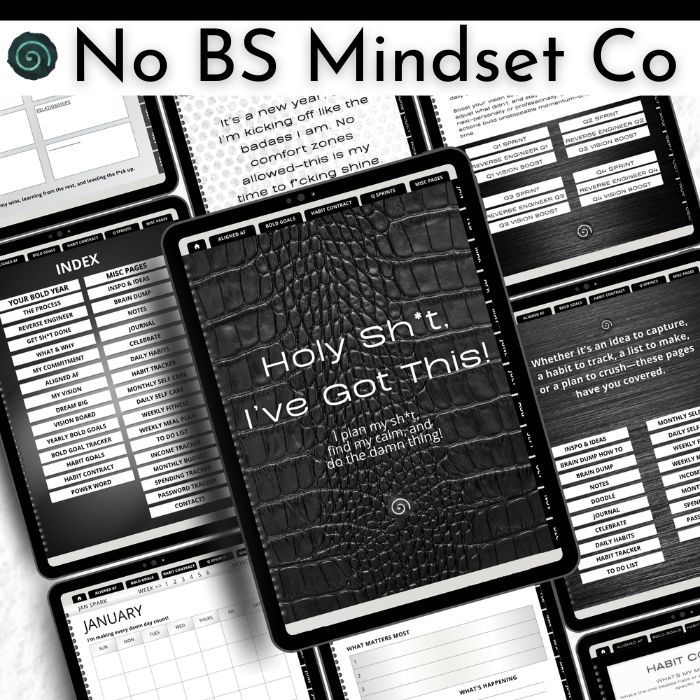
This is exactly why I created my Unfiltered Planning System. It’s designed for people who don’t want another rigid productivity method, but do want clarity around what actually matters so they can make better decisions without overthinking everything.
The goal of planning isn’t control. It’s momentum.
Pillar 4: Your Mindset Can Be Your Greatest Advantage
Did you know…
At age 23, Oprah had just been fired from her first broadcasting job.
At age 30, Jonah Peretti was teaching middle schoolers before founding his billion-dollar media companies, Buzzfeed and The Huffington Post.
At age 40, Stan Lee finally achieved success with Fantastic Four, Spider-Man and X-Men comics.
At age 50, Julia Child wrote her first cookbook. At age 62, Colonel Sanders’ fried chicken business, KFC, finally succeeded.
These are a good reminder that success has no deadline.
Mindset is the difference between seeing setbacks as proof you’ve failed and seeing them as information you can use. It’s also why flexibility matters. Even the best plans will need adjustment.
My TEDx talk was on this very topic.
In order to achieve success, you need to get comfortable with being uncomfortable. That means pushing yourself out of your comfort zone and trying new things. It can be scary, but it’s worth it. When you challenge yourself, you open up the possibility for growth.
Pillar 5: If You Want to Get There Faster – Build relationships
Success rarely happens in isolation.
Strategy matters, but relationships are often what accelerate progress. The right connections can shorten learning curves, open doors you didn’t know existed, and help you see opportunities that aren’t obvious when you’re working alone.
This doesn’t mean collecting contacts or networking nonstop. More relationships are not better. Better relationships are better. The most valuable ones are built on trust, generosity, and mutual respect, not transactions or constant pitching.
Some of my closest friendships began as professional connections, and one of the most important personal introductions in my life came through someone I originally met through business. When relationships are built on genuine curiosity and shared values, they tend to cross lines in ways that matter, personally and professionally.
Strong relationships also require expanding beyond your immediate circle. Staying in the same rooms with the same people can feel safe, but it often limits growth. New environments and diverse connections introduce new perspectives, ideas, and opportunities that strategy alone can’t create.
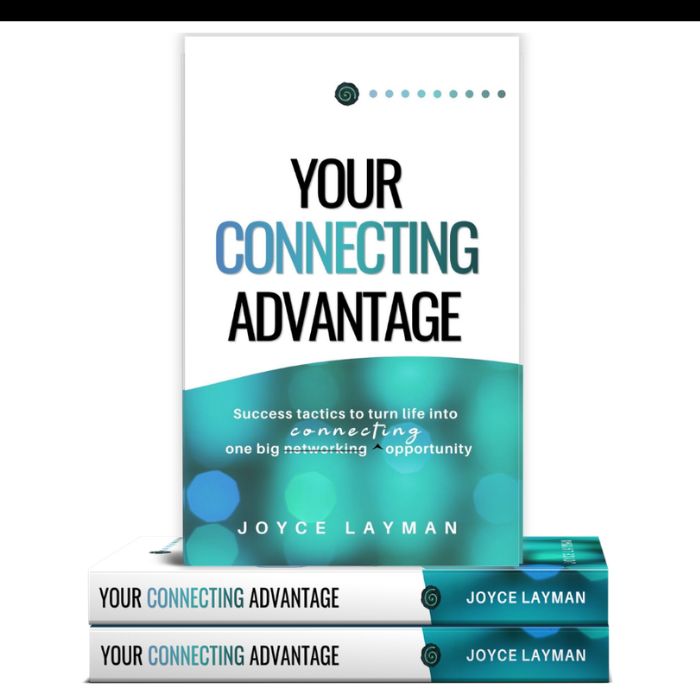
When you give as much as you expect to receive, relationships stop feeling like effort and start becoming leverage. This is the foundation of my book, Your Connecting Advantage, which explores how intentional, human-centered relationships can become one of your greatest assets, without forcing networking or playing a numbers game.
It’s never too late to start over.
You get to write your own definition of success. Success is unique for all of us because we all have a different mix of talents.
Final Thoughts
If you’re struggling to define what success means, here’s the good news:
It’s never too late to start over.
And you get to write your own definition.
If your head feels cluttered right now, that’s often the first signal that clarity is needed before action. I created the Headspace Sprint as a simple, low-pressure way to clear mental noise and reconnect with what actually matters before you make your next move.
Because success isn’t about doing more.
It’s about seeing more clearly.