Sharing your journey through stories is one of the most effective ways to connect with the right people—the ones who see themselves in what you’ve lived, tried, screwed up, and figured out along the way.
Stories build trust faster than tips. They lower defenses. They help people feel understood before they ever consider working with you.
That’s the real power behind attraction marketing. Not hype. Not “positioning.” Just being willing to share how you got from there to here in a way that feels human.
If you’re newer to the online world, the idea of “sharing your journey” can feel awkward or even a little performative. You might wonder if your story is interesting enough, relevant enough, or worth putting out there at all.
I used to think the same thing.
As a former wallflower in business networking, putting myself out there didn’t come naturally. What changed wasn’t confidence—it was understanding how story accelerates connection. Once I learned how to frame experiences in a way others could recognize themselves in, everything shifted.
Your journey isn’t one big story. It’s a collection of moments. And you only need one to start.
Start With One Specific Event
When you think about your journey, don’t start with your entire life or business arc. Start with one moment that stands out.
It might be a challenge you worked through, a decision that scared you, or an unexpected win. I call this a “there to here” story—the same framework I used for my TEDx talk and every keynote I’ve given since.
One of my favorite examples came from an unlikely place: Twitter. I shared a story about reaching out to Bob Burg—fully expecting nothing to come of it. That one ask led to sharing the stage with him a year later and, eventually, an endorsement of my second book.
That story wasn’t about networking tactics. It was about stepping out of a comfort zone. And every time I shared it, wallflowers came up afterward or emailed me later saying, “That sounded like me.”
That’s how you know a story is working.
TIP: Keep a running story file.
In 2007, mine was a Word document. Today, it’s Notes on my phone and Evernote on my computer. If you’re juggling ideas across platforms and losing track, this is exactly where a simple Notion content system can save you time and mental energy by keeping stories, drafts, and ideas in one place.
Don’t Worry About How It Sounds (Yet)
Attraction starts with honesty, not polish.
Write what you remember. Write what you felt. Write what you wish you’d known at the time. The doubt tends to show up when we jump straight to “How will this sound to other people?”
If you’re introverted, this step matters even more. You’re not writing to perform—you’re writing to reflect.
A simple place to start:
- Why did you start your business?
- Or, if you’re in the middle of a pivot, what’s pushing you toward change right now?
Get it out of your head first. Edit later.
Some people prefer journaling. Others type. Some record voice notes and transcribe them. There’s no right way—just one that helps you get unstuck. If your head feels cluttered or you’re overthinking every sentence, a short Headspace Sprint can help you clear the noise before you write anything meant to be shared.
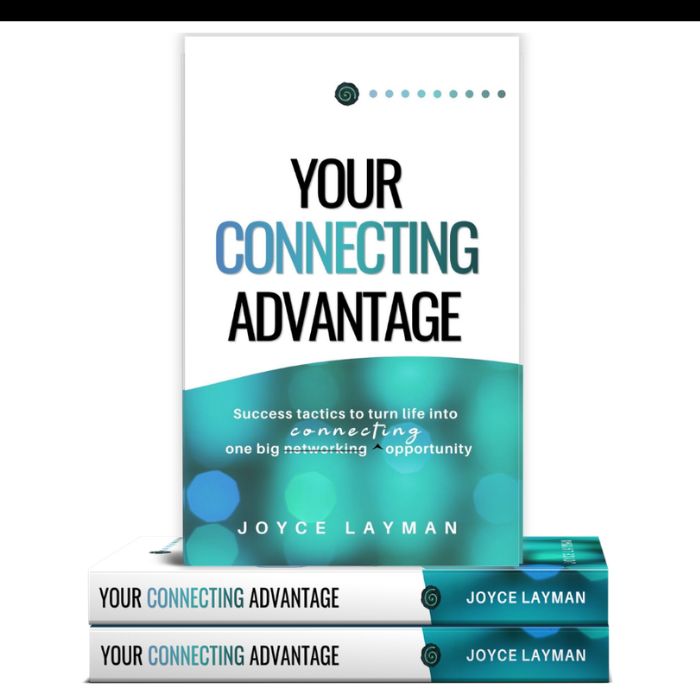
For the record, I used this exact process to write Your Connecting Advantage, a 237-page business book in 35 days, long before AI was part of the conversation. I used the same process to update that same book in record time in 2025.
Use a Simple “There to Here” Framework
Good stories are easy to follow. Not because they’re dramatic, but because they’re structured.
You don’t need every detail you remember. Focus on:
- The setup
- Three to five key moments
- What changed because of it
The most important part is the ending. Ask yourself:
How did this experience change me?
What did I learn?
What would I do differently now?
That reflection is where the meaning lives—and where your audience connects the dots to their own situation.
If you want to see how this works in practice, my TEDx talk is a clear example of how one story, well-framed, can create lasting impact without oversharing or overexplaining.
Share One Story in Multiple Ways
You don’t need new stories. You need better reuse.
One experience can become:
- A blog post or podcast episode
- A social post or short video
- An interview answer
- Your About page
- A workshop or live talk
Start with the platform that feels easiest. The format will naturally guide the length and level of detail.
The goal isn’t perfection—it’s consistency. Each time you share, you give someone else permission to recognize themselves in your story.
The Only Rule That Matters
Start.
Don’t wait until it sounds perfect. Don’t assume your story isn’t “big enough.” If it mattered to you, it will resonate with someone else.
Stories don’t attract clients because they’re impressive. They attract clients because they’re relatable.
Write it down. Save it. Share it when you’re ready.
And if you need support clearing your head, organizing your ideas, or seeing how your story fits into the bigger picture—you already have options to make that easier.
Your journey is already enough. You just have to tell it.